Binary Options Risk Management Strategies: A Practical Guide

Effective binary options risk management strategies involve limiting the capital exposed per trade, typically to 1-2% of your total balance, and setting daily loss limits. By maintaining discipline, using a Demo account to test strategies, and avoiding emotional decision-making, you can better manage your exposure in volatile synthetic markets.
Why are binary options risk management strategies essential for traders?
Binary options trading involves high levels of uncertainty where each trade results in a fixed outcome: you either receive a predetermined payout or lose the amount invested. Because the potential for loss is inherent in every position, implementing robust binary options risk management strategies is the most critical step for anyone looking to engage with the markets. Without a structured approach, it is easy to fall into the trap of emotional decision-making, which often leads to overtrading and rapid depletion of capital.
At 2x option, you can access a variety of tools to help you analyze market movements, including indicators like SMA, EMA, RSI, MACD, and Bollinger Bands. While these tools are powerful for technical analysis, they do not replace the need for a disciplined money management plan. Whether you are using candlesticks, Heikin Ashi, or line charts, your primary goal should be to preserve your account balance. Remember that availability and legality of these services depend on your country of residence. Before you begin, it is helpful to understand the basics of binary trading to ensure you have a solid foundation. Always approach the markets with the understanding that you should only trade with funds you can afford to lose, as market conditions can change rapidly.
How can you calculate the right amount to risk per trade?
One of the most widely accepted rules in trading is to never risk more than 1% to 2% of your total account balance on a single trade. This approach ensures that even a string of unsuccessful trades will not significantly damage your overall capital. For example, if you have a balance of $1,000, risking 1% means placing no more than $10 on a single position. This conservative sizing allows you to stay in the market longer, providing more opportunities to learn and refine your approach.
When you trade on 2x option, payouts are shown live per asset, typically ranging between 55% and 93%, and are locked once the trade is placed. Because the payout is fixed, you must calculate your position size based on the total amount you are willing to lose if the prediction is incorrect. Many beginners make the mistake of increasing their trade size after a loss to "win back" their money, which is a dangerous practice. Instead, maintain a consistent percentage regardless of recent outcomes. If you are just starting, consider reading about how to start trading with small capital to learn how to scale your efforts safely. You can practice these calculations using virtual funds in the Demo account, which allows you to test your risk tolerance without using your real capital.
Comparison of Risk Management Approaches
| Strategy | Focus | Benefit |
|---|---|---|
| Fixed Percentage | Risking 1-2% per trade | Prevents large drawdowns |
| Daily Loss Limit | Stopping after a set loss | Protects against emotional trading |
| Asset Diversification | Spreading trades across assets | Reduces impact of single-market volatility |
| Journaling | Tracking every trade | Identifies recurring mistakes |
What role does the Demo account play in risk management?
The Demo account is perhaps the most valuable tool for any trader, regardless of experience level. It provides a simulated environment where you can test your binary options risk management strategies using virtual funds. By treating your demo sessions with the same seriousness as a Real account, you can identify which technical indicators—such as RSI or Bollinger Bands—work best for your personal style without the pressure of losing real money.
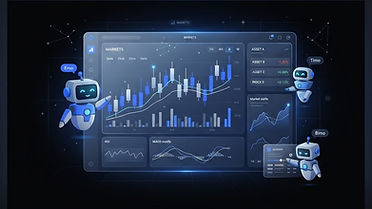
Many traders use the demo environment to master the platform interface, including how to use drawing tools and how to interpret different chart types like Heikin Ashi. Furthermore, if you choose to use optional AI trading assistants like Emo, Timo, or Bimo, the demo environment is the perfect place to observe how they function. Note that these assistants are clearly labelled AI and never guarantee results. By reviewing your performance in the demo, you can avoid common mistakes before they impact your actual balance. Always remember that the goal of the demo is education; use it to build a consistent, repeatable process that you can eventually apply to live markets.
How do you handle emotional discipline and daily limits?
Risk management is as much about psychology as it is about mathematics. Even with a perfect strategy, emotional impulses can lead to poor decisions. One effective way to combat this is to set a daily loss limit. For instance, if you decide that losing 3% of your account in a single day is your maximum threshold, you must stop trading immediately once that limit is reached. This "cool-down" period prevents the common urge to chase losses, which often leads to further errors.
At 2x option, you can trade various OTC synthetic markets, including currencies, crypto, and commodities. Because these markets are available frequently, it is easy to overtrade. To maintain discipline, consider keeping a trading journal where you record the asset, the setup used, and the outcome of every trade. This practice helps you evaluate your performance objectively. If you find yourself feeling frustrated or overly excited, it is a sign that you should step away from the screen. For further guidance on maintaining a professional mindset, explore best educational resources for binary trading. Remember that the platform is accessible via desktop and phone browsers, so you can manage your account responsibly from anywhere, provided you maintain your focus.
How to implement a structured trading plan?
Creating a structured plan is the backbone of sustainable trading. Your plan should define exactly when you trade, which assets you focus on, and what criteria you use to enter a position. For example, you might decide to only trade during specific hours when market volatility aligns with your strategy. By limiting your trading to these windows, you reduce the likelihood of making impulsive decisions during quiet or erratic market periods.
When you are ready to move from the demo to a Real account, ensure you have a clear understanding of the deposit and withdraw processes. Deposits are accepted via card and crypto, while withdrawals are reviewed manually by the team and may require identity verification. Having a clear plan also means knowing when to take profits. Since payouts are locked at the time of the trade, you know exactly what your potential return is before you commit. For more information on the legal and regulatory landscape, you can review resources from authorities like the Financial Conduct Authority (FCA) or the U.S. Commodity Futures Trading Commission (CFTC). Always ensure you are fully informed about the terms and privacy policies of the platform you use.
Steps to build your risk management framework
- Define your risk per trade: Decide on a fixed percentage (e.g., 1%) of your total balance to risk on each position.
- Set a daily loss limit: Determine the maximum amount you are willing to lose in a single day and commit to stopping if you hit it.
- Choose your assets: Focus on a limited number of OTC synthetic markets to better understand their specific price movements.
- Use the Demo account: Practice your strategy with virtual funds until you achieve consistent results over a significant number of trades.
- Keep a journal: Record every trade to identify patterns in your decision-making and strategy performance.
- Review and adjust: Periodically analyze your journal to refine your approach and remove strategies that are not performing well.
By following these steps, you create a professional framework that prioritizes capital preservation. If you ever need assistance, the Help center provides access to an AI help assistant and human support tickets to guide you through platform features. Remember that binary options vs forex trading involves different risk profiles, so ensure your strategy is tailored specifically to the binary format. Always check if binary options trading is legal in your jurisdiction before proceeding. Try the Demo account.
Practice with virtual funds before risking real money.
Try the Demo accountFAQ
Sources
Risk warning: Trading carries a high level of risk. You may lose all your capital. 18+ only. Not financial advice. Availability depends on your country.
Spotted a mistake? Tell us and we will correct it.