Binary Options Strategy for Intraday Traders: A Practical Guide
By 2x option Editorial TeamAI-assisted, reviewed29 Oct 2026 · 6 min read

An effective binary options strategy for intraday traders relies on technical analysis, disciplined risk management, and consistent testing. By using indicators like RSI and MACD on a Demo account, traders can refine their approach to short-term market movements before committing capital to a Real account.
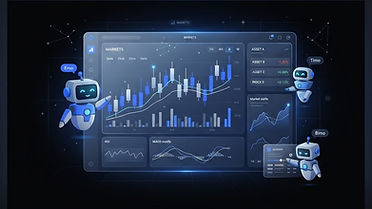
Why is a structured approach essential for intraday trading? Developing a reliable binary options strategy for intraday traders is the foundation of a disciplined approach to the markets. Intraday trading involves opening and closing positions within the same day, requiring a keen eye for short-term price fluctuations. Because the platform works on desktop and phone browsers, traders have the flexibility to monitor markets throughout their daily routines. Without a clear plan, trading can quickly become speculative, leading to emotional decisions that contradict long-term goals. A robust strategy provides a framework for when to enter and exit the market, helping you avoid panic selling or FOMO (fear of missing out). Whether you are analyzing currency pairs, crypto, or commodities, having a set of rules is vital. These assets on the platform are OTC (over-the-counter) synthetic markets. You can begin by exploring the Home page to understand the platform's core features. Remember that the availability and legality of these services depend on your specific country of residence, and you must verify local regulations before engaging in derivative trading. A structured approach transforms trading from a hobby into a methodical process, focusing on probability and consistent rule application rather than luck. ## How do you choose the right indicators for your strategy? Technical analysis is the backbone of any intraday strategy. On the 2x option platform, you have access to a variety of tools, including candlesticks, Heikin Ashi, line, and area charts. To confirm trends, many traders utilize indicators such as SMA (Simple Moving Average), EMA (Exponential Moving Average), RSI (Relative Strength Index), MACD (Moving Average Convergence Divergence), and Bollinger Bands. These indicators function by smoothing out price data to highlight potential directions or anomalies. For instance, the RSI is frequently used to identify overbought or oversold conditions—a state where price momentum may be ready to reverse. Bollinger Bands are particularly effective for visualizing market volatility, expanding during high-activity periods and contracting during consolidation. If you are new to these tools, reading Binary Options Indicators for Beginners: A Practical Guide can provide the necessary context to start building your own setup. Always remember that indicators are meant to assist your analysis, not guarantee specific outcomes. You should combine these with price action analysis to form a cohesive view. ### Comparison of Common Technical Indicators | Indicator | Primary Use Case | Best Market Condition | | :--- | :--- | :--- | | RSI | Identifying momentum | Trending or ranging | | Bollinger Bands | Measuring volatility | Ranging markets | | MACD | Trend confirmation | Trending markets | | SMA/EMA | Trend direction | Trending markets | ## What is the role of risk management in your trading plan? Risk management is not optional; it is the most critical component of your trading journey. Because binary options are all-or-nothing instruments, you must protect your capital by never risking more than a small percentage of your balance on a single trade. A common rule of thumb is to limit exposure to 1-2% per position. This ensures that a string of losses does not deplete your account, maintaining the longevity required to benefit from a positive win rate over time. For a deeper dive into protecting your funds, consult Binary Options Risk Management Strategies: A Practical Guide. Furthermore, always be aware of the risks involved, as detailed in our Risk Disclosure. Managing your expectations is key, as no strategy can eliminate the possibility of loss. Effective risk management also involves understanding the nature of payouts, which are shown live per asset, between 55% and 93%, and are locked when the trade is placed. Because the payout is fixed at the start, you can calculate the exact potential outcome before confirming your position, allowing for precise position sizing relative to your account equity. ## How to test your strategy using a Demo account? Before you ever risk real capital, you should test your strategy using a Demo account. This environment allows you to trade with virtual funds, providing a safe space to refine your entry and exit rules without financial pressure. To effectively test a strategy, follow these systematic steps: 1. Strategy Formulation: Define your entry criteria (e.g., RSI below 30). 2. Backtesting: Look at historical data on the platform to see if the rule would have worked in the past. 3. Forward Testing: Execute at least 20 to 50 trades in the Demo account in real-time. 4. Journaling: Record every trade, the reason for entry, and the outcome. 5. Analysis: Review your journal to find patterns in your mistakes. If the strategy shows consistent performance, you might consider transitioning to a Real account. You can find more information on how to get started with limited funds in How to Start Binary Options Trading with Small Capital. Testing is the only way to verify if your technical analysis actually translates into a repeatable process. ## What are the steps to execute an intraday trade? Executing a trade requires a systematic process to maintain consistency. Follow these steps: 1. Select your asset: Choose from the available OTC synthetic markets for currencies, crypto, or commodities. 2. Analyze the chart: Switch between chart types like candlesticks or Heikin Ashi and apply indicators to identify trends. 3. Determine the expiry: Choose an expiration time that aligns with your strategy, keeping in mind that payouts are locked once the trade is placed. 4. Set your stake: Ensure the amount aligns with your risk management rules. 5. Monitor the trade: Observe the live payout, which typically ranges between 55% and 93%. You should also use the available drawing tools to mark support and resistance levels directly on the chart to refine your decision-making. For more guidance on selecting a broker, see How to Choose a Reliable Binary Options Broker: A Guide. ## How do you handle deposits and withdrawals? Managing your account efficiently is part of a professional trading approach. 2x option accepts deposits via card and crypto, providing flexibility for global users. When you are ready to withdraw, please note that requests are reviewed manually by our team. You may be required to provide an email code and complete identity verification to ensure the security of your funds. This manual review process is a standard safety protocol. For detailed instructions on managing your balance, visit the Deposit or Withdraw pages. If you encounter any issues, our Help Center, which features an AI help assistant (labelled AI) and human support tickets, is available to assist you. Always review our Terms and Privacy policy to understand the operational procedures regarding liquidity and withdrawal processing. ## Can AI assistants help with your trading strategy? 2x option provides optional AI trading assistants, such as Emo, Timo, and Bimo. These tools are clearly labeled as AI and are designed to provide data-driven insights, but they never guarantee results. They should be used as a supplement to your own analytical efforts rather than a replacement for your personal judgment. Additionally, the platform features a 10-level Rewards program that gives bonuses with specific turnover conditions; these conditions should be understood clearly before participating, as they dictate how bonus funds are utilized. You can explore these rewards on the Rewards page. Remember that trading requires continuous learning; for further education, check out Best Educational Resources for Binary Trading: A Complete Guide. Always stay informed by consulting resources from financial regulators like the U.S. Commodity Futures Trading Commission or the Financial Conduct Authority regarding the nature of derivative trading. By combining your analytical skills with the platform's resources—such as the AI support, the Demo environment, and advanced charting—you can develop a disciplined approach to the OTC synthetic markets.
Practice with virtual funds before risking real money.
Try the Demo accountFAQ
Sources
Risk warning: Trading carries a high level of risk. You may lose all your capital. 18+ only. Not financial advice. Availability depends on your country.
Spotted a mistake? Tell us and we will correct it.